Outdoor Lighting Design for Delaware Homes
Good outdoor lighting does more than switch on at dusk. It guides guests up the walk, makes steps easier to see, shows off the architecture and plantings you are proud of, and leaves fewer dark corners around the property. HomeMax designs and installs outdoor lighting for homes in Dover, Lewes, and communities across Kent and Sussex counties. Because our team handles electrical work as well as remodeling, the same people who help you choose fixtures can run the circuits, mount the transformers, and set up the controls, so the design and the wiring are planned together.
Layering Light Around Your Home
A good lighting plan works in layers instead of relying on one bright floodlight over the garage. Each layer has a specific job, and together they make the yard comfortable and safe to use after dark without flooding everything in harsh light.
- Path lights that mark walkways and garden borders without lighting the whole lawn
- Step and riser lights that make stairs, deck edges, and level changes visible
- Entry and porch fixtures that light faces, house numbers, and door locks
- Uplighting that grazes stone, columns, or the canopy of a mature tree
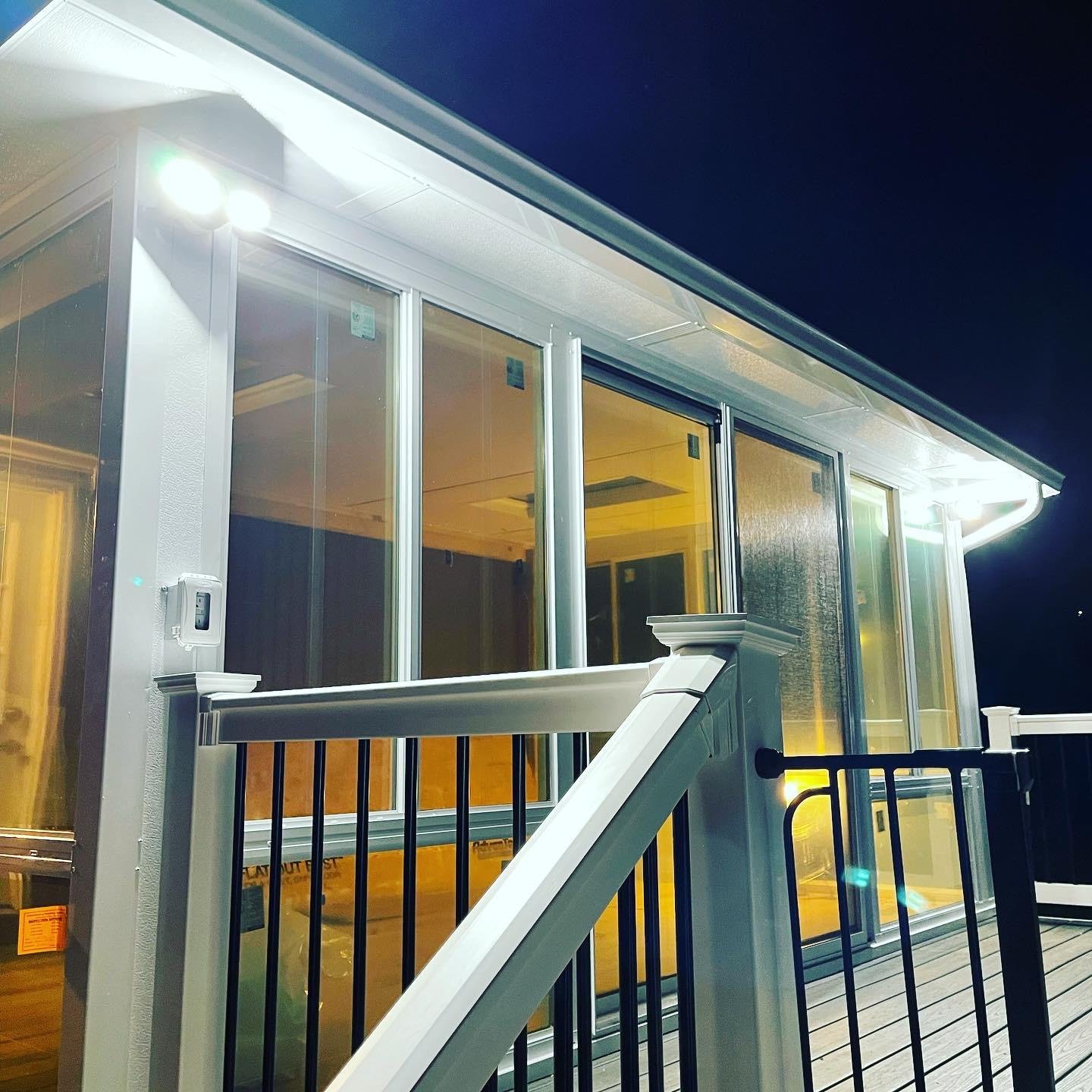
- Motion-activated floodlights covering driveways, side yards, and back doors
Low-Voltage vs. Line-Voltage Fixtures
Most landscape lighting runs on low voltage. A transformer, plugged into a weatherproof outdoor outlet or wired in directly, steps household power down, and lightweight cable carries it to path lights, spotlights, and step lights. Low-voltage systems are flexible, simple to adjust as plants grow, and well suited to accent and pathway lighting.
Line-voltage fixtures run on standard household current. They are typical for porch lights, wall lanterns, and security floodlights, and they need weather-rated boxes, protected wiring, and a properly sized circuit. Many homes use both: line voltage on the house itself and low voltage out in the landscape.
Timers, Photocells, and Smart Controls
Controls decide when your lights actually run. A photocell turns lights on at dusk and off at dawn on its own, adjusting automatically as the seasons change, while a timer can switch decorative lighting off late at night to save energy. Smart controls let you set schedules, group fixtures into zones, and change settings from your phone. Motion sensors make the most sense on security lights, where a sudden change in lighting calls attention to movement near the house.
Avoiding Glare and Light Spill
The goal is to notice the effect of the light, not the bulb itself. Shielded fixtures, careful aiming, and moderate brightness keep light on the path or the tree instead of in someone's eyes. Warmer color temperatures tend to feel more inviting than cool, bluish light, and aiming floodlights down rather than outward keeps light from spilling into neighboring yards and bedroom windows.