Patio Installation for Delaware Homes
A patio gives you a level, durable place to eat, gather, and relax right off the back of the house. Done well, it feels like an extra room. Done poorly, it cracks, settles, or sends rainwater straight toward your foundation.
HomeMax builds concrete, paver, and stone patios for homeowners in Smyrna, Bridgeville, and communities across Kent and Sussex counties. Because our team also handles electrical work, lighting and outdoor outlets can be planned alongside the patio instead of cutting into it later.
Concrete, Pavers, or Natural Stone
Poured concrete is versatile and smooth, and it can be colored, stamped, or brushed for texture. Control joints guide the cracking that concrete naturally develops as it cures and moves with the seasons, though a cracked slab is hard to patch invisibly.
Pavers are individual units set on a compacted base, so they flex with freeze and thaw cycles, and a piece that settles can be lifted and reset. Natural stone such as flagstone or bluestone offers a one-of-a-kind look with irregular shapes and rich color, and it pairs well with garden settings.
Grading and Drainage Come First
The most important part of a patio is the part you never see. The ground is excavated, a compacted gravel base is built up in layers, and the finished surface is sloped gently away from the house so rain runs off instead of pooling against the foundation. Skipping these steps leads to puddles, settling, and water problems indoors.
- Slope the surface away from the house, never toward it
- Keep the patio surface below door thresholds and siding
- Plan downspout discharge so roof water bypasses the patio
- Use edge restraints to keep pavers from spreading
Laying Out Space for Dining and Seating
Decide how you will use the patio before settling on its size. Allow enough space around a dining table for people to pull chairs out and walk behind seated guests, and arrange a seating area around a fire feature or a view. A change in material or a low wall can define separate zones, and a grill works well near the kitchen door but away from main walkways.
Pairing Your Patio With Outdoor Lighting
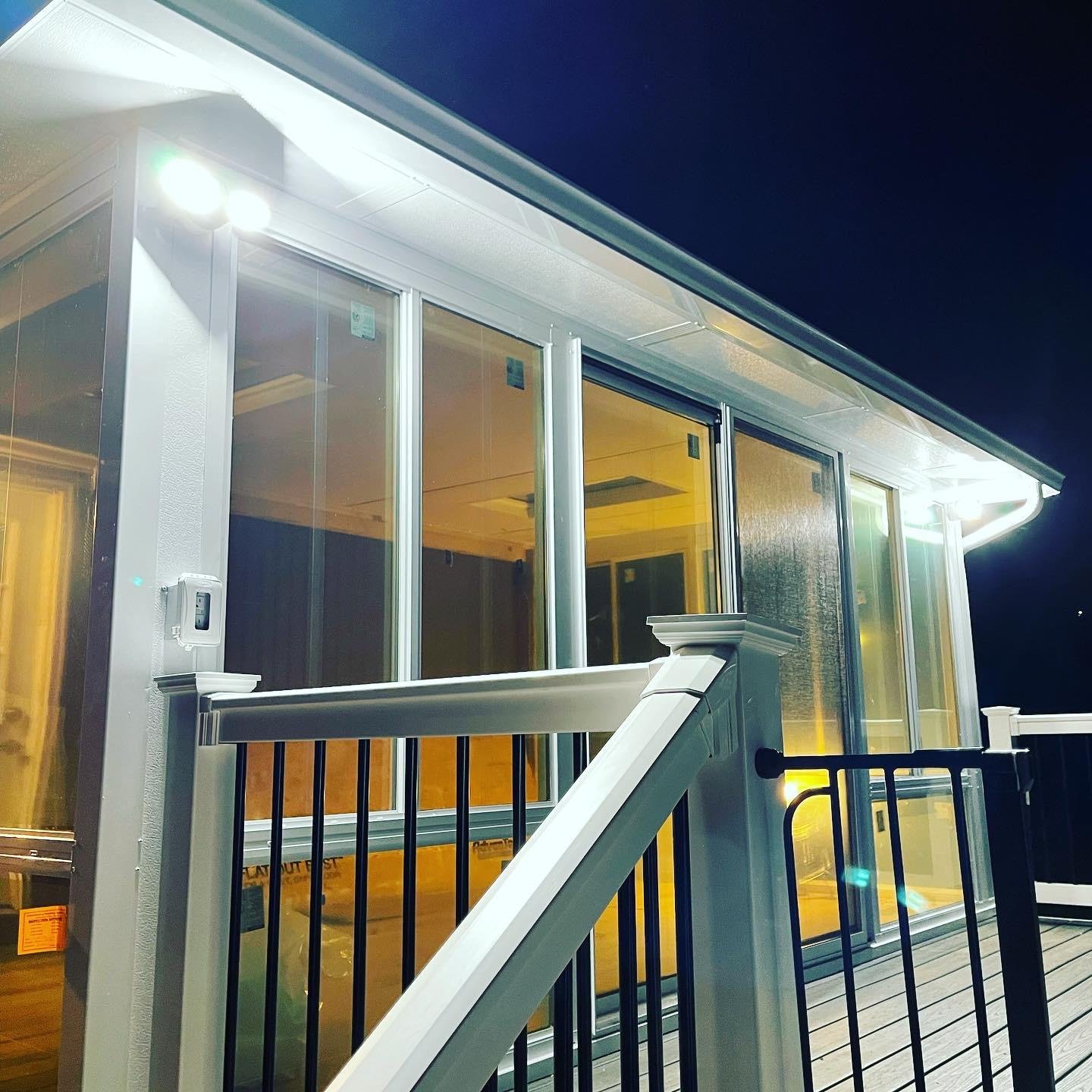
Lighting turns a patio into a space you can enjoy after sunset. Step lights at level changes, wall fixtures by the door, and soft perimeter lighting make the area safe without harsh glare. Running conduit and planning outdoor outlets before the surface goes down avoids cutting into a finished patio later, and weather-resistant covers protect anything left plugged in.