Home Generator Installation in Delaware
A home generator is only as dependable as the installation behind it. Where the unit sits, how it connects to your fuel supply, and how it ties into your electrical system all affect whether it starts and carries the load when a storm knocks out power. HomeMax installs generators for homeowners in Dover, Milford, and communities throughout Kent and Sussex counties.
We are licensed, bonded, and insured, and we plan each installation around both the electrical connection and the site work. Here is what a typical project involves, from the first walk around your property to the final test run.
Site Assessment and Generator Placement
Placement comes first. A standby generator needs a level, well-drained spot outdoors with enough clearance from windows, doors, vents, and property lines to meet the manufacturer's instructions and local requirements. Those clearances help keep exhaust out of the house, reduce fire risk, and leave room for service access.
We also weigh practical details: the distance to your gas meter or propane tank and to your electrical panel, how sound will carry toward bedrooms and neighbors, and whether the spot stays clear of standing water during heavy rain.
Setting the Pad and Running the Fuel Line
The generator sits on a stable, level pad that keeps it above grade and away from pooling water. From there, a fuel line is run from your supply to the unit.
If your home already has natural gas service, the generator can usually draw from it, as long as the meter and piping can deliver enough gas for the generator and your other gas appliances at the same time. Where natural gas is not available, propane is the usual choice, which means planning a tank of suitable size in a location that works for deliveries and meets placement rules.
Connecting the Transfer Switch
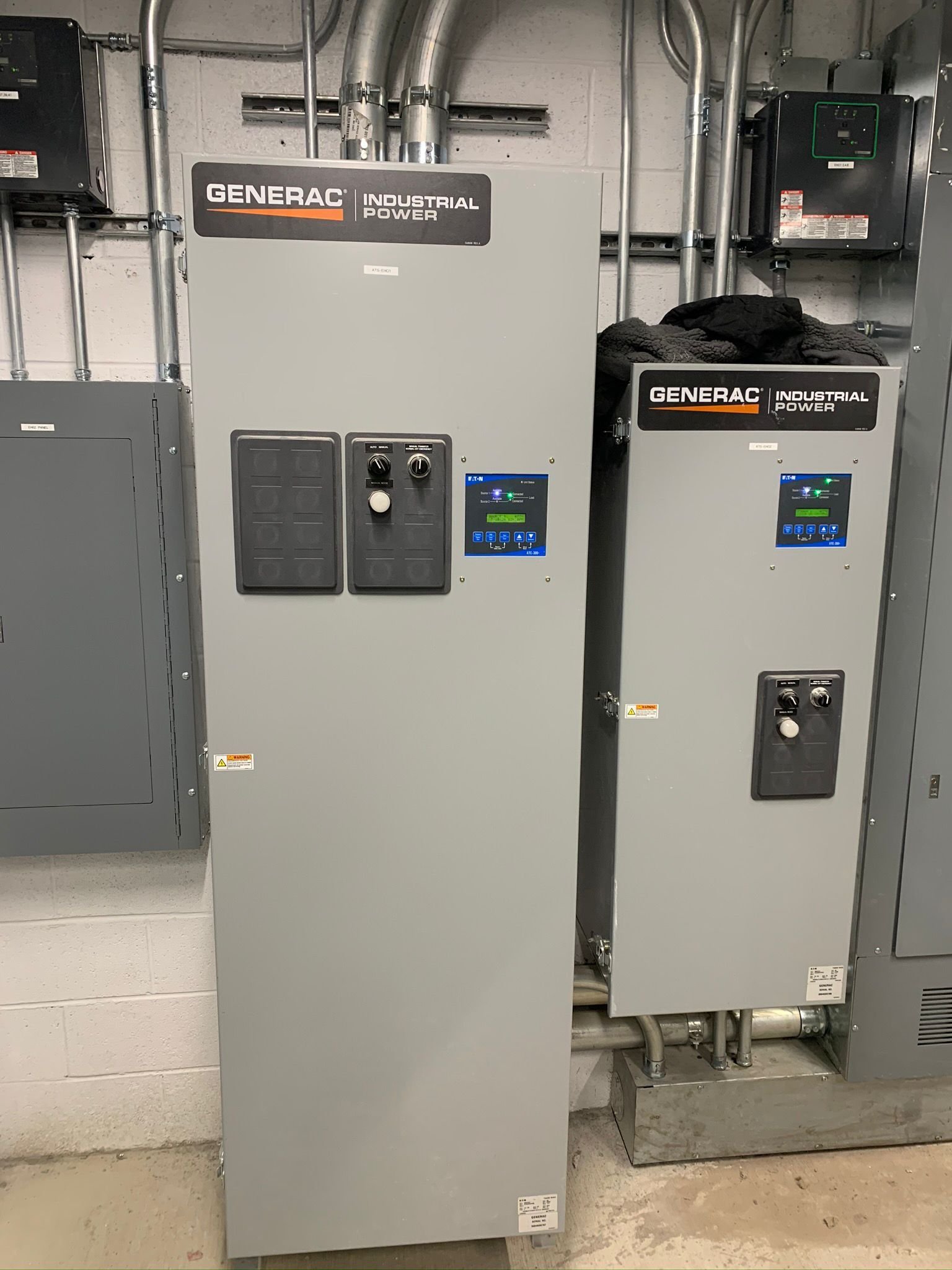
The transfer switch is the link between the generator and your home's wiring. It keeps your house connected to only one power source at a time, which is what makes backup power safe for your home and for utility crews. Depending on the coverage you choose, the switch either feeds a selected group of essential circuits or connects at your main electrical service to back up the whole home.
This part of the job belongs with a licensed electrical contractor, since the wiring, breakers, and grounding must meet the applicable electrical code and the manufacturer's specifications.
Startup, Testing, and Your Walkthrough
Before the job wraps up, the system is started and tested. That means confirming the generator runs properly on its fuel supply, simulating a utility outage so the transfer switch shifts your home to generator power, and checking that it switches back smoothly when utility power is restored. Then we walk you through the system, including:
- How to read the status lights or controller display
- What the scheduled self-test sounds like and when it runs
- How to shut the unit down safely if you ever need to
- Where the transfer switch is and what it does during an outage
- When to schedule routine service