Automatic Standby Generators for Delaware Homes
A standby generator is installed permanently outside your home and wired into your electrical system. When utility power drops, it starts by itself and takes over within moments, whether you are home, asleep, or away. There is nothing to roll out, refuel, or plug in during a storm.
That automatic response is the main appeal for homeowners in Millsboro, Laurel, and other communities in Kent and Sussex counties, where a nor'easter, coastal storm, or summer thunderstorm can take out power with little warning. HomeMax installs and services standby generators sized and configured for the way your household uses power.
How Automatic Backup Power Works
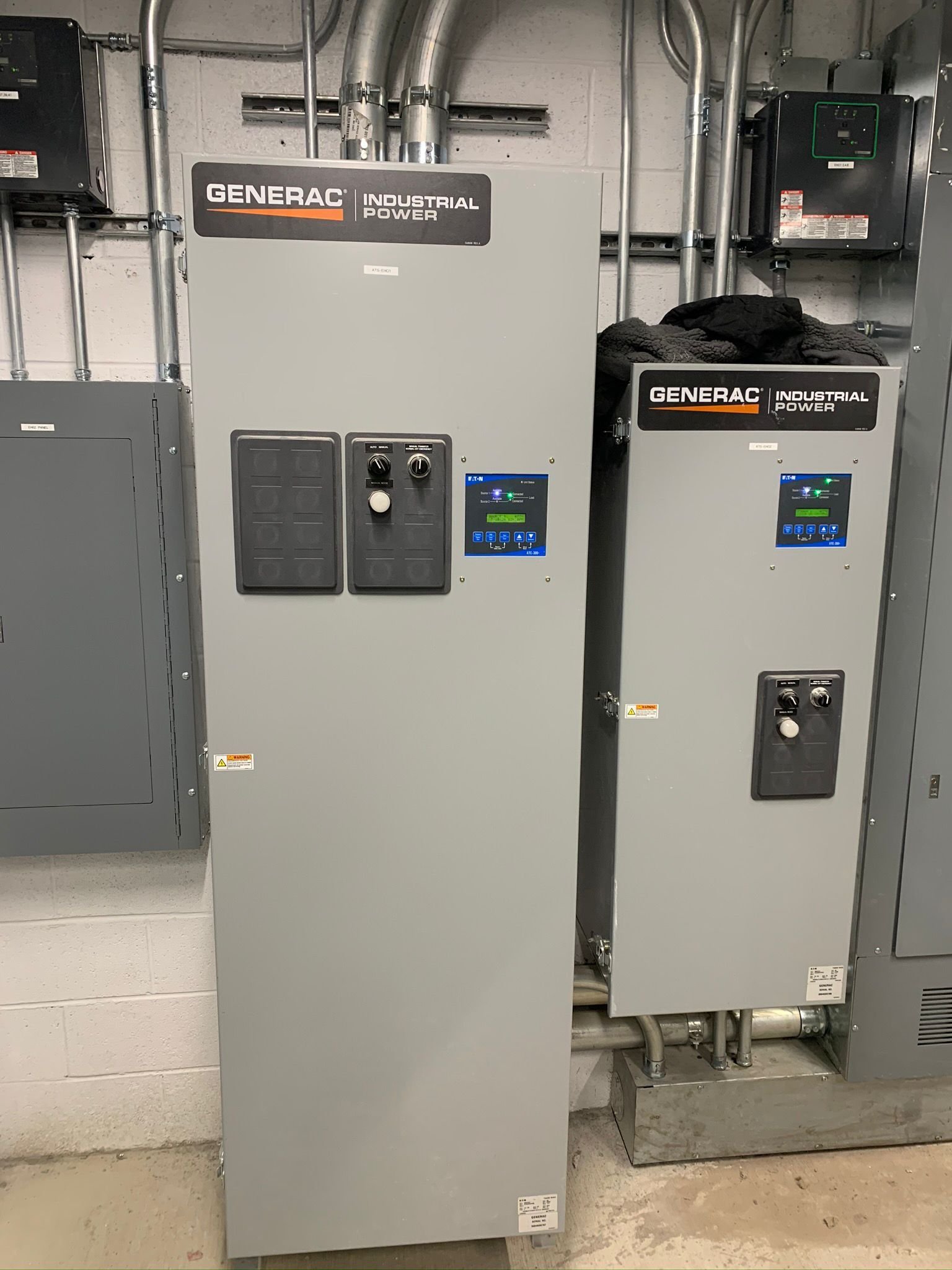
An automatic transfer switch, working with the generator's controller, keeps watch on incoming utility power. When that power fails, the generator starts, its output is allowed to stabilize, and the switch then moves your home's circuits from the utility over to the generator.
When utility power returns and holds steady, the switch moves your home back, and the generator runs for a short cool-down period before shutting off. Because the switch keeps the two power sources separated, generator power cannot flow back onto utility lines and endanger the crews restoring service.
Essential Circuits or Whole-Home Coverage
Standby systems are typically set up in one of two ways. An essential-circuit setup moves a chosen group of circuits onto generator power, covering what matters most without carrying the entire house. A whole-home setup connects at your main electrical service and can keep nearly everything running. Some use load management, which temporarily holds off large appliances such as central air when the generator nears its capacity. The right approach depends on your priorities and the generator size that makes sense for your home.
Fuel Choices and Automatic Self-Tests
Standby generators run on natural gas or propane, and each has trade-offs. Natural gas arrives through a utility line, so there is no fuel to store or refill. Propane is kept in a tank on your property, which makes it a practical choice for homes without gas service, though you will want to keep an eye on the tank level.
Between outages, a standby generator does some of its own checking. It runs a brief self-test on a set schedule to keep the engine ready, and its controller flags problems such as a weak battery or a failed start. Those checks are useful, and they are meant to work alongside routine professional service, not replace it.
Homes That Benefit Most From Standby Power
HomeMax is an authorized Generac dealer and can help you decide whether a standby generator suits your home. It is especially worth considering if any of these describe your household:
- Your water comes from a well pump
- A sump pump protects your basement or crawl space
- Someone in your home relies on powered medical equipment
- You work from home and need internet, phones, and computers
- Outages in your area are frequent or tend to last
- You travel and want heat, refrigeration, and pumps covered while away