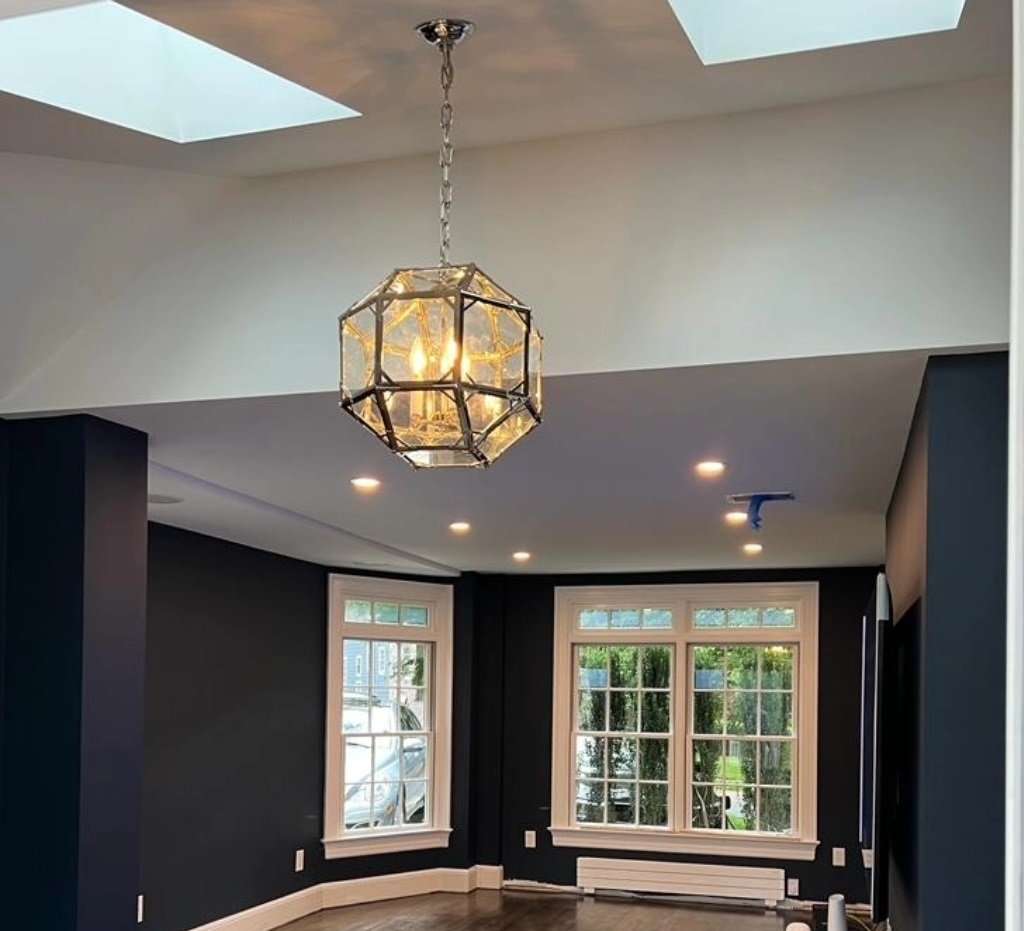
Interior Painting in Delaware With Careful Prep Work
Fresh paint is one of the simplest ways to change how a room looks and feels, but the quality of the result is decided long before the first coat goes on. Patching, sanding and priming create the smooth surface that makes new color look crisp and uniform.
HomeMax paints walls, ceilings, trim and doors for homeowners in Dover, Dagsboro and throughout Kent and Sussex counties. Painting can be a project on its own or the finishing step of a larger remodel, and because our team also handles drywall and electrical work, bigger wall repairs and fixture changes can be completed before painting begins.
Surface Prep That Makes Paint Last
Most paint problems trace back to preparation. Nail holes and dents are filled, cracks are repaired, and patched areas are sanded smooth and spot-primed so they do not show through as dull patches. Glossy surfaces are scuff-sanded so new paint grips, gaps along trim are caulked, and water or smoke stains get a stain-blocking primer so they do not bleed through the finish coats.
In older homes, trim is often coated in oil-based paint, which needs cleaning, scuff-sanding and a bonding primer before a water-based finish will adhere.
Choosing the Right Sheen for Each Room
Sheen affects both appearance and durability. Flatter finishes hide surface flaws, while glossier finishes wipe clean more easily but highlight imperfections.
- Flat or matte: ceilings and low-traffic rooms such as formal living rooms
- Eggshell: living rooms, dining rooms and bedrooms
- Satin: kitchens, bathrooms, kids' rooms and busy hallways
- Semi-gloss: trim, doors, cabinets and window casings
Ceilings, Trim and Low-Odor Paint Options
Ceilings are typically painted first so drips do not land on freshly painted walls, usually in a flat finish that minimizes glare and hides small flaws. Trim, doors and baseboards get a durable, wipeable sheen and sharp, clean lines where they meet the wall. In bathrooms, a paint formulated to resist mildew is worth considering, especially during Delaware's humid summers.
If odor is a concern, low-odor and low-VOC paints are widely available. They release fewer solvent fumes as they dry, which many homeowners appreciate in bedrooms and living spaces, though ventilating the room while painting is still a sensible step.
Protecting Your Furniture and Floors
A careful paint job protects everything that is not being painted. Furniture is moved to the center of the room and covered, floors are protected with drop cloths, and switch plates and outlet covers come off so edges stay clean. Hardware, light fixtures and built-ins are masked where needed. When the work wraps up, coverings are removed and plates go back on.